
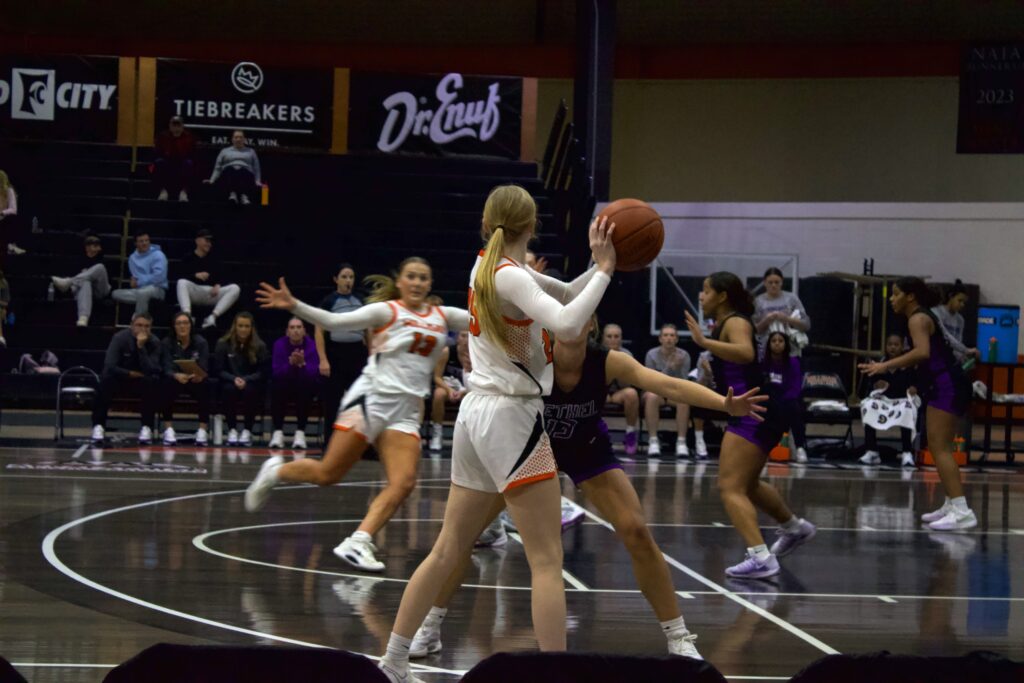
After several competitions got cancelled the weekend after the carbon monoxide leak in Steve Lacy Fieldhouse, competitions resumed the following week, including the basketball, swim, tennis, softball and baseball teams. However, basketball sophomore Emma Cutshall was unable to compete because of remaining symptoms from carbon monoxide poisoning.
“I have been to the ER four times and have appointments with a cardiologist and pulmonologist to undergo more tests,” Cutshall said in an interview on Feb. 19. “My heart rate, shortness of breath, fatigue, headache, light-headedness and chest pains are all symptoms I am still currently experiencing.”
Carbon monoxide is an odorless, colorless gas that can cause illness or even death when inhaled. The symptoms are often described as flu-like. Carbon monoxide affects athletes and athletic performance because it binds to hemoglobin over 200 times more tightly than oxygen does, forming Carboxyhemoglobin bonds. Those bonds cause less oxygen to be delivered to muscles, brain and the heart. Carboxyhemoglobin levels of 5 to 10%, as some Milligan athletes had, can significantly reduce the delivery of oxygen, causing earlier fatigue, decreased endurance, slower reaction time and poor decision-making.
“Athletes may look fine but feel gassed quickly or get headaches with exertion,” Ballad Health’s Director of Sports Medicine Todd Flower, said. “There can be neurologic effects, including headache, dizziness, confusion and visual disturbances. Delayed symptoms can occur hours to days later. Carbon monoxide also increases myocardial oxygen demand and reduces supply. That is oxygen delivery to the heart itself. This can unmask hidden cardiac problems that no one knew about.”
After the leak, interim athletic director Jeff Bourn and the athletic training staff have been working alongside physicians from Ballad Health, including Flower, to create a return-to-play protocol for all affected athletes.
Once symptom-free at rest and with a normal neurologic exam, athletes can begin the protocol, which is divided into three stages. Day one is light aerobic activity with less than 70% of max heart rate for 10-20 minutes. Most Milligan athletes did a smooth bike ride or walk for this stage, only being able to move on to stage two if symptom-free during and after activity. Advance to moderate training is stage two, including sports-specific drills without contact and max efforts. Stage three is at full practice intensity with conditioning and monitoring for fatigue, headache or cognitive complaints. The next day athletes can compete if asymptomatic, concluding the protocol if no delayed symptoms occur for 24 hours.
Since being hospitalized on Wednesday, Feb. 4, when her carboxyhemoglobin levels were at 7.1% freshman swimmer Emily Dubes completed her return-to-play protocol. She finished it on Saturday, Feb 7.
“Since (the leak), I have been training and competing,” Dubes said. “It’s been a little more difficult than normal to get back to where I was since my body is still exhausted from fighting the carbon monoxide, but my coaches have been helpful in getting me back up to speed. When training, I do notice that I feel more exhausted faster than before the incident, but it is getting better, and thankfully, I’m not experiencing any long-lasting effects.”
Most athletes are back to training and competing as before. The number of athletes still not able to compete was not available upon request, but Cutshall’s case is not the only one; the cheer team, for example, had to pull out of a competition because their athletes still experienced symptoms.
Cutshall is unsure when she will be able to return to normal physical activity.
“I have not completed the return-to-play protocol and have not been able to do any physical activity since the exposure,” she said. “I’m still having doc appointments and tests done to make sure there is no long-term damage to my heart and lungs. Although I am not training or competing, I still struggle to get through my normal daily tasks without having any symptoms. Walking to classes has become a very strenuous activity in itself.”
Carbon monoxide has been a subject of recent studies conducted to see if it improves athletes’ physical performance, with the primary concerns being the consequences of acute and chronic exposure to varying concentrations.
“There are a couple of studies with very tiny doses of carbon monoxide being studied for anti-inflammatory effects and vasodilation of the vessels,” Flower said. Vasodilation is a medical term for the widening of blood vessels in the body, which lowers blood pressure by allowing more blood to pass through them. “It is experimental and highly regulated. Right now, it is not applicable to athletic enhancement.”
Disclaimer: The reporter is a member of the swim team and was affected by the carbon monoxide leak. This story was written on Feb. 20, 2026.
Photo: Milligan women’s basketball competing in a home game