
Let’s start with an admission: Most of us don’t read the news. Not really. We catch headlines between classes, see screenshots in a group chat or absorb some half-remembered take from a video we scrolled past at 1 a.m. We know something is happening somewhere. We’re just not sure what or what it has to do with us.
That’s the problem this series is here to poke at.
The news can feel like a lot. Wars, elections, budgets, court rulings, recalls: It arrives in a never-ending stream, usually framed as either a crisis or a spectacle. Tuning it out feels like self-preservation. Who has the energy to be outraged by everything all the time?
But here’s the thing: The news is not really about “them.” It’s about you.
It’s the closing of a residence hall, a new course registration system, the water quality report, visa rules for your international classmates, laws that change what you can do with your own body, your own data and your own future. Decisions are being made every single day by people with power, and they’re made a lot more easily when nobody’s paying attention.
That’s why the news matters. Not because it’s dramatic, but because it’s the record of who decided what and why. News is how you can hold anyone accountable and how you find out what’s being decided on your behalf.
And caring doesn’t mean doom-scrolling. It doesn’t mean having a hot take on everything. It means being informed enough to know when something really does affect you and curious enough to ask questions when it does.
So this series is going to do a few things:
- Explain why stories matter, not just what happened, but who’s affected and what’s at stake.
- Help you tell good information from noise, because not everything that looks like news is.
- Make it OK to be overwhelmed and show how to stay engaged without burning out.
- Remind you that you have a stake, whether you want one or not.
Will some of it make you want to weep? Probably. The world gives us plenty of reasons. But some of it might make you laugh, or get you fired up, or just make you feel a little less lost.
Either way, you’ll know what’s going on. And that’s the whole point.
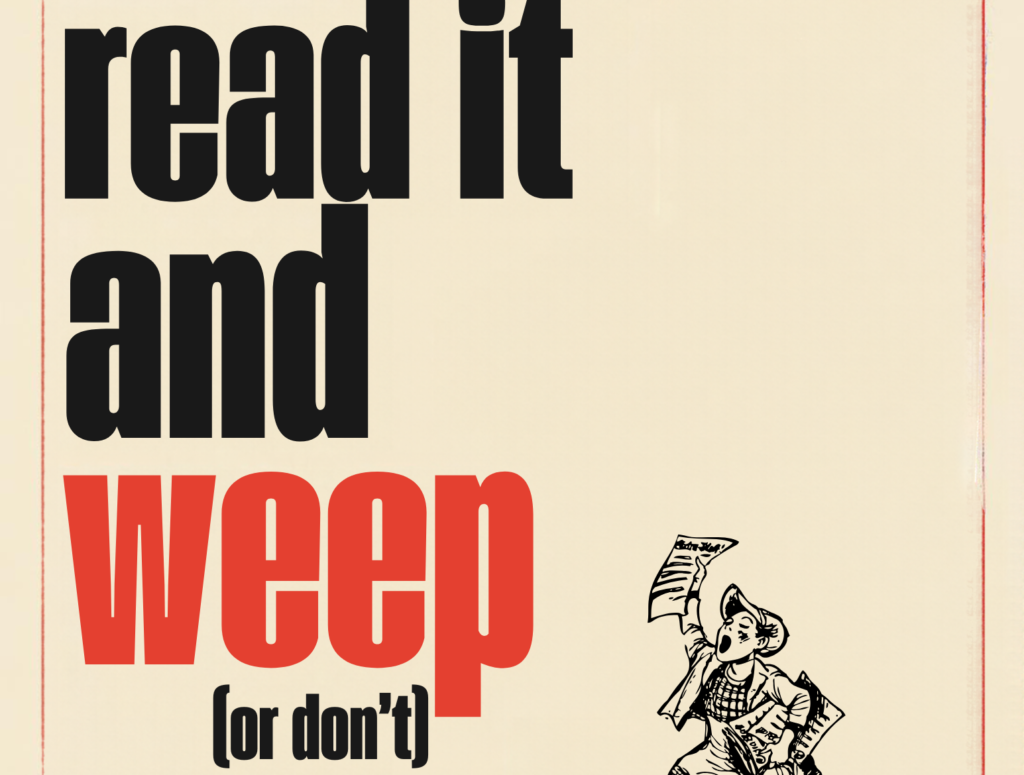
So read it and Weep (or don’t)!
Photo: Logo for “Read it and Weep (or don’t)!” (Credit: Gabby Jones)

Comments