
Church music styles vary widely among congregations. Recently, lively discussions have emerged on campus about questioning traditional worship norms — mainly, what constitutes “appropriate worship.”
Many churches take joy in singing a cappella, appreciating the pure sound of voices without instruments. Others enjoy the lively energy created by drums, keyboards and electric guitars powered by 2,000 watts.
Some churches have specific rules about who can lead or join in worship activities. Some include a children’s choir, while others do not. It’s wonderful to see the variety in worship traditions that reflect each community’s uniqueness. Yet, debates over what defines proper worship can grow so fierce that they lead to splits and the formation of new congregations.
Behind the Times — Intentionally?
Dr. Craig Farmer, professor of church history at Milligan University and choir director at Hopwood Christian Church, gives an annual lecture on John Wesley and traditional worship. Although his remarks vary slightly each year, one statement remains constant: “Stop singing ‘Jesus is my boyfriend, Jesus is my girlfriend.’”
Farmer’s remark underscores the often superficial nature of some modern Christian music, encouraging listeners to reflect on the sincerity and depth of our worship.
Farmer suggests that dropping the pronoun “I” in modern Christian music could be transformative, since many songs tend to focus excessively on personal feelings rather than on God. He proposes emphasizing “you” to foster a sense of community and connection with God.
He and I agree that contemporary Christian music often appears somewhat egocentric. While we sometimes view the music as ego-driven, we acknowledge that others might interpret it differently, seeing pronouns like “I” as a reaffirming, personal commitment between the servant and God.
A New Spin on Worship
In Sept. 2025, Milligan hosted Rev. Dr. Terence Z. Gadsden — a Milligan alumnus, campus pastor and athletic chaplain at North Park University. He delivered an insightful lecture on the connection between hip-hop culture and Christian culture.
“I’ve attended worship spaces and conferences many times, and the DJ is often seen as a novelty before the conference begins,” Gadsden said.
Gadsden emphasized that combining hip-hop and Christian culture helps bridge socioeconomic and cultural barriers, allowing Christians to connect with others in their community, especially in urban settings.
All the Children of the World
Watching my two children develop their love for singing what they call “Jesus songs” is a blessing. They enjoy singing classics like “Yes, Jesus Loves Me,” “Father Abraham” and “I’ve Got the Joy, Joy, Joy, Joy Down in My Heart.” Sometimes they even sing all the words perfectly, which makes me genuinely happy. Seeing their enthusiasm touches me deeply, but it also makes me ask: Are they truly worshipping God during these moments, or is it just a performance? These songs aren’t nearly as solemn as chanting Psalm 51, and they include pesky pronouns like “I” all over the place.
Meeting People Where They Are: Grace
Introducing age-appropriate Christian music to children fosters a connection with God and promotes the growth of Christianity as a cultural tradition, bridging the generational gap between adults and children. Meeting them where they are — understanding their current theological views while creating an inclusive worship environment — is grace. While everyone has a favorite style of worship music, it’s essential to acknowledge the diverse musical traditions that reflect our backgrounds. Embracing this variety helps us form deeper connections with believers from different cultures and generations. It also opens opportunities to share faith with those who haven’t yet embraced it. For example, alternative or contemporary Christian music might include unique instruments like a banjo or a turntable, adding a creative touch to worship. Ultimately, what matters most is supporting Christians who worship in ways that bring them closer to God. When we bridge cultural and generational differences, it highlights the beauty of grace.
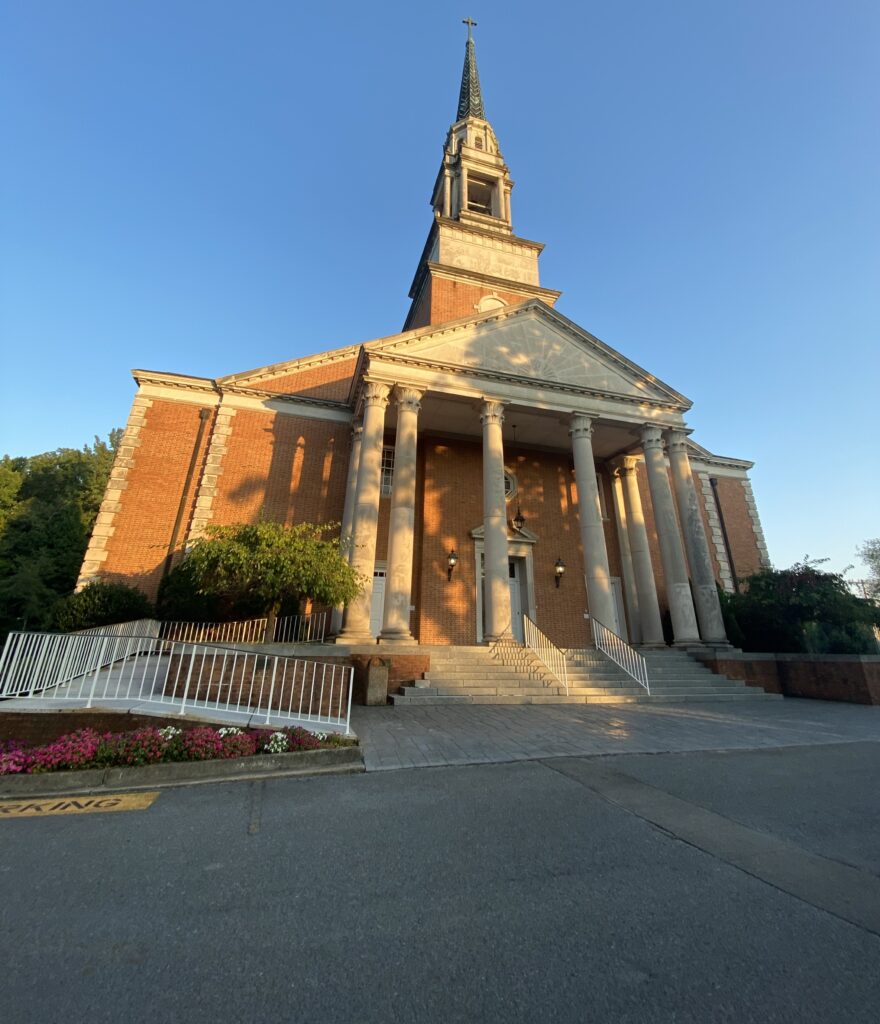
Cover Photo: Seeger Chapel provided by Emily Haas