
By: Alissa Smith and Mary Grace Bitting
Recent program suspensions at Milligan have prompted questions about how funding works at a private institution, particularly as academic changes occur alongside campus projects such as the renovation of the 70-year-old Webb Hall. University administrators say these developments reflect the institution’s funding structure, in which not all dollars can be used interchangeably.
Milligan primarily bases its annual operating budget on projected student enrollment, which is estimated months in advance for each incoming class. As a private university, Milligan does not receive state funding and instead relies on tuition revenue, gifts and contributions.
“The university builds a budget based on anticipated student enrollment … for each program,” said Rhajon Smith, vice president for institutional advancement. “In addition, the university relies on gifts and contributions to support the annual operating budget.”
Fundraising initiatives coordinated through the advancement office help support scholarships, academic programs and other institutional needs. One such initiative is the university’s annual Day of Giving, which raises funds to support students across campus.
In addition to general fundraising, some donations are designated for specific purposes. These are known as donor-restricted funds and must be used according to donor intent.
“If the university accepts the gift, we are required to place the funds into accounts labeled ‘Donor Restricted Funds,’” Smith said.
Donor-restricted funds may be used only for their specified purpose, such as scholarships, academic start-up funding or campus projects. Smith cited donations from local businesses that helped fund the launch of Milligan’s engineering and physician assistant programs as one example.
This distinction between funding sources is especially apparent in major construction projects. The renovation of Webb Hall, for example, followed a feasibility study conducted by an external firm to determine whether refurbishment was more cost-effective than a new build.
“The bones of the building were good enough that it could be refurbished,” said Jacqui Steadman Smith, vice president for finance and business affairs. “It was about 30% less than a new build.”
The Webb Hall renovation is expected to cost approximately $20 million. Smith said the university has already received a $1 million donor-restricted gift specifically designated for the Webb project and continues to fundraise. About 75% of the remaining cost will be financed through tax-exempt bonds, with the remaining 25% ideally covered by a combination of donations and internal cash reserves.
While tuition revenue is not directly allocated to construction costs, Smith said revenue generated by Webb Hall once it reopens will be used to help repay the bonds over an estimated 20-year period. Tuition dollars would be used only if housing revenue proves insufficient.
The renovation will consist of existing components being removed and replaced. Planned updates include new flooring, cabinetry, bathrooms, plumbing, fresh paint and upgraded electrical systems to support air conditioning. Air conditioning has already been installed in Sutton Hall, and the next phase of the project focuses on renovating all of the bathrooms throughout Sutton.
Although final pricing has not yet been determined, Smith said housing costs for Webb Hall will increase and are expected to be nearly comparable to Village housing rates.
During construction, some upperclassmen will need to live off campus. Smith said the university is aiming for flexibility and will not require students who move off campus to return once Webb reopens, particularly if lease obligations make that difficult.
“We really want first- and second-year students to be able to stay on campus for the sake of community,” Smith said.
Smith also said the lack of air conditioning and aging infrastructure in Webb Hall had become a concern for prospective students and families.
“We believe that Webb Hall is an impediment to student recruitment,” Smith said. “We didn’t want housing to be in the con column anymore.”
Alongside housing improvements, the university is constructing a gazebo near the Student Union, intended as a gathering space for students and a venue for campus events. Smith said the project, funded entirely through donor contributions, honors former President Bill Greer and First Lady Edwina Greer and will provide convenient access to bathrooms within the Student Union.
While these physical projects focus on campus life, administrators are also addressing policies that affect student affordability. The recent announcement prohibiting future student-athletes from stacking athletic scholarships with academic merit scholarships in the 2026–27 academic year has raised concerns about affordability.
Smith emphasized that the total amount of aid awarded will not necessarily decrease, noting that coaches retain flexibility in how scholarships are distributed. Smith said the university’s current discount rate is unsustainable and must be reduced to support other institutional priorities. Over-awarding scholarships to a single incoming class, she said, can create a four-year financial strain.
The university is working to balance scholarship reductions with student support. Smith noted that the policy remains under discussion, with additional meetings planned in the coming weeks to consider possible changes.
Long-term campus planning continues beyond current projects. For several years, Milligan has discussed building a new athletic fieldhouse. Smith said the project remains part of the university’s long-term strategic plan.
“That is definitely still on the list of things that we would like to do,” Smith said. “We felt like the housing issue needed to be addressed first before we tackled anything else.”
She added that there are currently no significant donations designated for athletics or other projects and noted that another academic building would also be desirable.
As the Webb Hall renovation moves forward through donor gifts and bond financing, university officials said decisions about academic programs and scholarship policies will continue to be driven by enrollment trends and the university’s operating budget.
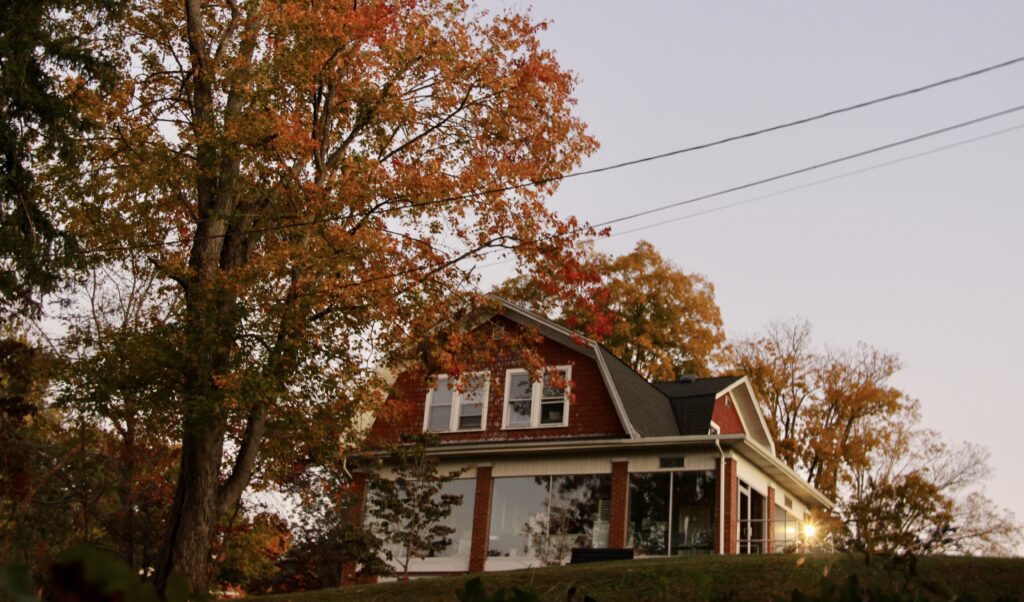
Photo: Milligan’s business office on Oct. 24, 2024 (by Danielle Roberts)

