
Milligan has significantly expanded its approach to campus safety since last spring, moving to
round-the-clock security coverage, launching a campus-wide fire alarm and carbon monoxide
detector project and installing cameras in high-traffic areas.
Director of Campus Safety and Technical Systems Chase McGlamery described the change as
part of a “layered approach” to safety rather than a single fix.
“It’s not just a security contract vendor and that’s it,” McGlamery said. “Safety in general
requires a lot of different things to work together.”
The most visible change is the shift from nighttime-only security coverage to security officers on
campus around the clock. Historically, campus security operated from 5 p.m. to 8 a.m.; now, at
least one officer is on duty at all times, with additional coverage during shift overlaps or specific
events.
Milligan also switched security contractors this year, moving to Axis, a Johnson City-Kingsport-
based company that provides coverage for large events such as Bonnaroo and Bristol Motor
Speedway, as well as security for other schools.
McGlamery said the switch came down to scale and direction. “Our previous company that we
worked with wasn’t really something that they felt like they could do or scale up for us,” he said.
“We were heading in two different directions: them as a company and then us as a campus that
continues to grow.”
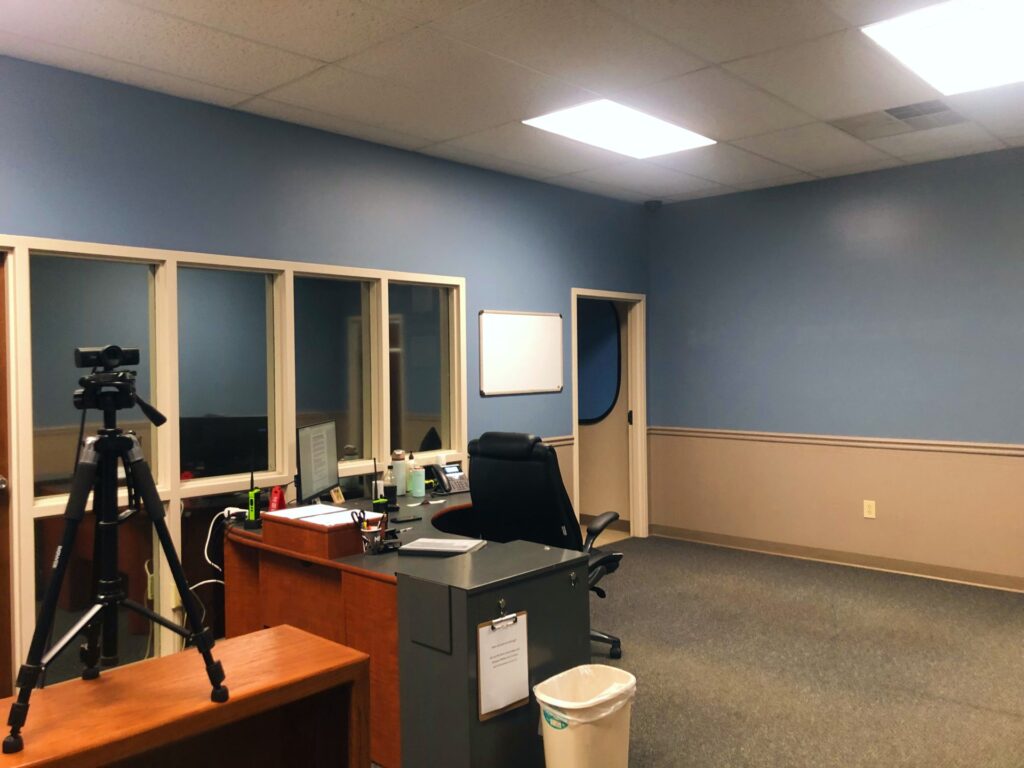
Security has also relocated its home base from the physical plant to the lower level of the student
union building, a move McGlamery said was intentional. “I still wanted our students to feel
comfortable calling security, talking with security, laughing with security like they’re not the bad
guys,” he said.
Milligan is in the middle of a major fire alarm upgrade affecting 18 buildings on campus. Hart,
Sutton, Gregory and the SUB were completed before students returned this fall, and crews are
currently working in Seeger, with Steve Lacey Fieldhouse next in line. The Milligan Village
buildings are scheduled for winter break, followed by the science building, the library, Hardin
Hall and Paxson in the spring.
The upgrades include new smoke detectors, pull stations, panels and built-in carbon monoxide
detectors. Notably, the new panels connect directly to Milligan’s network, allowing the safety
team to receive fire alarm notifications instantly rather than waiting for a monitoring company to
call.
“We’ve seen an increase in response times,” McGlamery said, adding that the newer equipment
has also reduced false alarms in buildings where it’s been installed.
McGlamery noted that the SUB had never had fire alarms until this year since the building
predates when fire alarms were legally required and was technically grandfathered in under
Tennessee code. Seeger had fire alarms but no automatic smoke detection – meaning alarms
would only sound if someone pulled the alarm. The science building has the same gap, which the
project is addressing.
Each building must go through a state-level design review and multiple inspections by the state
fire marshal before completion, a process McGlamery said typically takes about a year per phase.
McGlamery said the safety team held focus groups with RAs and student leaders before the
semester began and heard three recurring questions about the expanded camera system.
The first was whether the university uses AI facial recognition or biometric tracking. “The
answer is absolutely no,” McGlamery said. “We do not deploy any sort of AI tool or system
when it comes to our life and safety stuff.”
The second was where footage is stored. Milligan purchased its own server and hosts all video
footage on campus rather than through a third-party cloud provider. “It’s our data, our campus,
we should own it,” McGlamery said.
The third was whether footage is shared freely. McGlamery said only a small, trained group has
access to the system and cameras are used strictly for investigative and response purposes rather
than active monitoring. “We don’t have someone in a room watching camera footage all day
long,” he said. A reported incident triggers a review; footage involving students is referred to the
Dean of Students’ office, while compliance or Title IX-related matters go to the HR office under
restricted sharing terms.
Camera placement follows Tennessee law, which prohibits cameras in areas with a reasonable
expectation of privacy – dorm rooms, hallways inside residence halls, bathrooms, locker rooms
and private offices. Cameras are permitted in high-traffic public areas, including residence hall
lobbies, which McGlamery said primarily address concerns about non-affiliated individuals
attempting to enter dorms.
“We are not in the business of covert surveillance,” he said.“The cameras that we have are
straight from the factory… we’re not trying to hide them.”
“We didn’t use a third-party contractor to install these cameras,” McGlamery explained. “I went
through and did my installer certification and training with Axis Communications.” The cameras
are from Axis Communications, which has no relation to Axis Security. McGlamery said this
was to protect the overall system and keep as much as possible in-house**,** but also to be
financially responsible.
McGlamery said the university plans to continue expanding both its camera network and
electronic door control systems over the next five to 10 years as part of a longer-term safety
roadmap.
Pic 1: New security office found in the lower SUB (Photo Credit: Gabby Jones)

Comments